i know why the caged bird sings poem pdf
I Know Why the Caged Bird Sings: A Comprehensive Analysis
Finding a “I Know Why the Caged Bird Sings” poem PDF often involves searching reputable online literary resources. Many websites offer free, downloadable PDFs
for educational purposes, allowing readers to deeply engage with Angelou’s powerful verses.
Numerous academic databases and poetry archives also provide accessible versions of the poem, ensuring widespread availability for study and appreciation.

Maya Angelou’s “I Know Why the Caged Bird Sings” stands as a cornerstone of American literature, a poignant exploration of freedom, oppression, and the enduring power of the human spirit. Published in 1969, the poem quickly resonated with readers across diverse backgrounds, becoming a defining work of the Civil Rights era and beyond.
Angelou, a celebrated author, poet, and activist, drew heavily from her own life experiences to craft this evocative piece. Her autobiography, also titled “I Know Why the Caged Bird Sings,” provides crucial context for understanding the poem’s deeply personal and historical roots. The poem itself, however, transcends autobiography, functioning as a universal allegory for the struggles faced by marginalized communities.
Accessing the poem is remarkably easy in the digital age. A simple online search for “I Know Why the Caged Bird Sings poem PDF” yields numerous results, offering convenient access to the text for study, analysis, and personal reflection. These PDFs are often sourced from educational websites, literary archives, and online poetry collections, ensuring authenticity and accessibility.
The poem’s enduring relevance continues to inspire critical analysis and appreciation, solidifying Angelou’s legacy as a literary icon and a voice for social justice.
Historical Context: African American Oppression
“I Know Why the Caged Bird Sings” is inextricably linked to the historical realities of African American oppression in the United States. The poem powerfully reflects the legacy of slavery, segregation, and systemic racism that profoundly shaped the lives of Black Americans for centuries. Understanding this context is crucial for a complete appreciation of Angelou’s work.
The poem’s imagery of a caged bird directly alludes to the constraints and limitations imposed upon enslaved Africans and their descendants. The denial of basic freedoms – movement, expression, and self-determination – is vividly portrayed through the bird’s plight. References to gatherings like those at Congo Square, where enslaved people found solace in music and dance, further ground the poem in historical reality.
Finding a “I Know Why the Caged Bird Sings poem PDF” allows for close textual analysis, revealing how Angelou skillfully employs symbolism to represent the collective trauma and resilience of the African American community; The poem serves as a testament to the enduring spirit of a people who refused to be silenced despite facing unimaginable adversity.
Studying the poem alongside historical accounts of the Jim Crow era and the Civil Rights Movement deepens understanding of its profound social and political significance.
The Central Metaphor: The Caged Bird
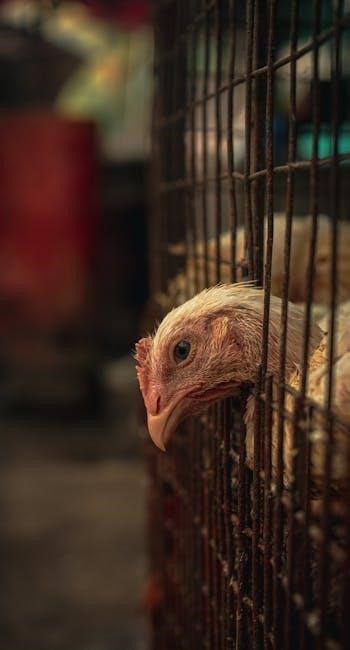
The caged bird functions as the poem’s central and most potent metaphor, embodying the experience of captivity and the longing for freedom. It’s a powerful representation of the African American struggle against oppression, symbolizing those denied basic human rights and subjected to systemic injustice. The bird’s physical confinement mirrors the social, political, and economic limitations imposed upon Black individuals.
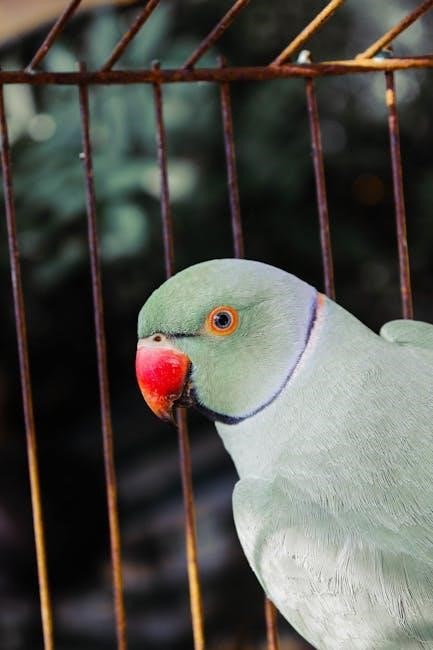
Angelou masterfully contrasts the caged bird with its free counterpart, highlighting the disparity between privilege and subjugation. The cage itself becomes a symbol of societal structures designed to restrict and control. Despite its imprisonment, the caged bird continues to sing, a testament to the resilience of the human spirit and the unwavering hope for liberation.
Finding a “I Know Why the Caged Bird Sings poem PDF” facilitates a detailed examination of how Angelou utilizes the bird’s song as a symbol of protest and self-expression. The fearful trill and the desperate cries represent the pain and anguish of a marginalized community, yet also their refusal to be silenced.
The metaphor resonates deeply, extending beyond the specific context of racial oppression to encompass any struggle for freedom and self-determination.
The Free Bird: Symbol of Liberty and Privilege
The free bird in Maya Angelou’s poem embodies liberty, privilege, and the uninhibited enjoyment of natural rights. It represents those who benefit from a society free of systemic oppression, able to move without restriction and experience the world on their own terms. The bird’s ability to “float on the back of the wind” and “dip his wings in the orange sun rays” illustrates a carefree existence, devoid of the struggles faced by its caged counterpart.
This freedom isn’t merely physical; it’s also symbolic of the social and economic advantages enjoyed by the dominant group. The free bird’s ownership of the sky highlights a sense of entitlement and unchallenged power. It experiences a world readily available, while the caged bird’s world is severely limited.
Finding an “I Know Why the Caged Bird Sings poem PDF” allows for close reading of the verses describing the free bird, revealing how Angelou subtly critiques the complacency and unawareness of those who benefit from privilege.
The contrast between the two birds isn’t intended to evoke envy, but rather to expose the inherent injustice of a system that grants freedom to some while denying it to others.
The Caged Bird: Symbol of Captivity and Struggle
The caged bird serves as a potent symbol of captivity, oppression, and the enduring human spirit’s struggle for freedom. Representing the African American experience, particularly during the era of slavery and segregation, the bird’s confinement embodies the limitations imposed by systemic racism and societal injustice. Its clipped wings and barred cage signify the denial of basic rights and opportunities.
Despite its physical imprisonment, the caged bird refuses to be silenced. Its song, described as a “fearful trill,” becomes a powerful expression of resilience and a desperate plea for liberation. This song isn’t one of joy, but a lament born of suffering and a testament to the unwavering hope for a better future.
Finding an “I Know Why the Caged Bird Sings poem PDF” facilitates a deeper understanding of the imagery surrounding the caged bird, revealing the meticulous detail Angelou employs to convey its pain and longing.
The bird’s struggle resonates with anyone who has experienced marginalization or oppression, making it a universally relatable symbol of resistance and the pursuit of self-determination.
Analyzing the Contrasting Imagery
Angelou masterfully employs contrasting imagery throughout “I Know Why the Caged Bird Sings,” primarily juxtaposing the freedom of the free bird with the captivity of the caged bird. The free bird “floats down stream” and “dips his wings in the orange sun,” enjoying boundless liberty and access to nature’s abundance. This idyllic portrayal sharply contrasts with the caged bird’s restricted existence.
The caged bird’s imagery focuses on confinement – “bars of his cage,” “clipped wings,” and a limited perspective. However, even within these constraints, the bird’s song emerges as a powerful counterpoint, representing resilience and an unyielding spirit. This sonic freedom clashes with the visual imprisonment.
Finding an “I Know Why the Caged Bird Sings poem PDF” allows for close textual analysis, highlighting how Angelou uses verbs and descriptive language to emphasize these differences. The free bird soars and floats, while the caged bird beats and trembles.
This deliberate contrast underscores the poem’s central theme of freedom versus oppression, forcing readers to confront the stark realities of inequality and the enduring power of hope in the face of adversity.
The Significance of Song and Voice
Song and voice are paramount in “I Know Why the Caged Bird Sings,” functioning as potent symbols of resistance and self-expression. The caged bird’s song, despite its “fearful trill,” represents an indomitable spirit refusing to be silenced by oppression. It’s a cry for freedom, a testament to enduring hope, and a declaration of identity.
The poem suggests that the song isn’t merely a pleasant sound, but a vital necessity for survival – a way to maintain dignity and assert personhood in the face of dehumanizing conditions. The free bird’s song, while joyful, lacks the same depth of meaning, as it isn’t born of struggle.
Finding an “I Know Why the Caged Bird Sings poem PDF” facilitates a detailed examination of the language surrounding the song. Angelou repeatedly emphasizes the bird’s need to sing, highlighting its intrinsic connection to its being.
Ultimately, the song embodies the power of voice to challenge injustice and preserve cultural memory, echoing the historical context of African American spirituals and the resilience of a community determined to be heard.
Stanza-by-Stanza Breakdown: Lines 1-38
The opening stanzas establish a stark contrast between the free bird and the caged bird, immediately setting the poem’s central conflict. Lines 1-6 depict the free bird’s effortless existence, claiming the sky and enjoying natural abundance. This idyllic imagery sharply contrasts with the subsequent description of the caged bird, confined and restricted.
Lines 7-14 introduce the caged bird’s limited world – a cage, clipped wings, and a longing gaze. The repetition of “but” emphasizes the bird’s inability to experience the freedoms enjoyed by its counterpart. However, despite this confinement, the bird sings.
Finding an “I Know Why the Caged Bird Sings poem PDF” allows for close reading of lines 15-22, where the song is described as a “fearful trill,” revealing both vulnerability and defiance. Lines 23-38 expand on the song’s significance, portraying it as a desperate plea for freedom, a hymn to a distant past, and a testament to an unbroken spirit.
These initial stanzas lay the foundation for the poem’s exploration of oppression, resilience, and the enduring power of hope, even in the face of seemingly insurmountable obstacles.
Stanza-by-Stanza Breakdown: Lines 39-76
The latter half of the poem intensifies the contrast established in the first half, delving deeper into the caged bird’s internal experience. Lines 39-46 reiterate the free bird’s privileged existence, now emphasizing its casual enjoyment of life’s simple pleasures, further highlighting the caged bird’s deprivation.
Lines 47-56 return to the caged bird, focusing on the desperation fueling its song. The bird opens its throat “to sing,” not with joy, but with a yearning for liberation. This song becomes a symbol of resistance, a refusal to be silenced by oppression.
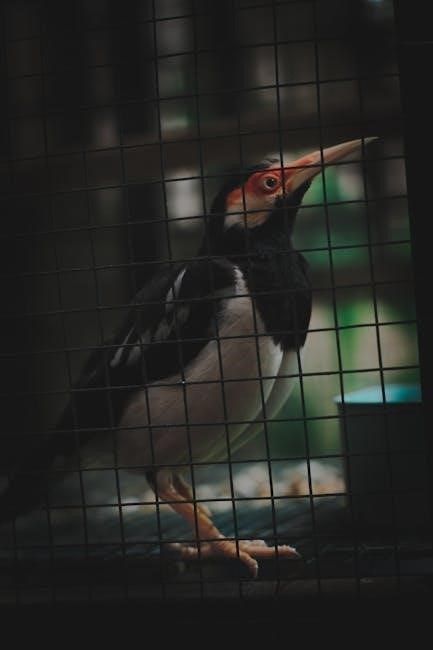
Finding an “I Know Why the Caged Bird Sings poem PDF” facilitates a detailed examination of lines 57-64, where the bird’s song reaches a fever pitch, attracting attention but not necessarily understanding. Lines 65-76 powerfully conclude the poem, asserting that the caged bird’s song is a testament to its unwavering hope and the enduring human spirit.
The final lines emphasize that despite its captivity, the bird continues to sing, embodying resilience and the unyielding pursuit of freedom, even when it seems unattainable.
Themes of Freedom vs. Oppression
The central conflict in “I Know Why the Caged Bird Sings” revolves around the stark juxtaposition of freedom and oppression, embodied by the two birds. The free bird represents those with privilege and liberty, able to experience the world without constraint, while the caged bird symbolizes those subjected to systemic injustice and limitations.
Angelou masterfully uses imagery to convey the suffocating reality of oppression. The cage itself becomes a metaphor for the societal structures that confine and silence marginalized communities, particularly African Americans.
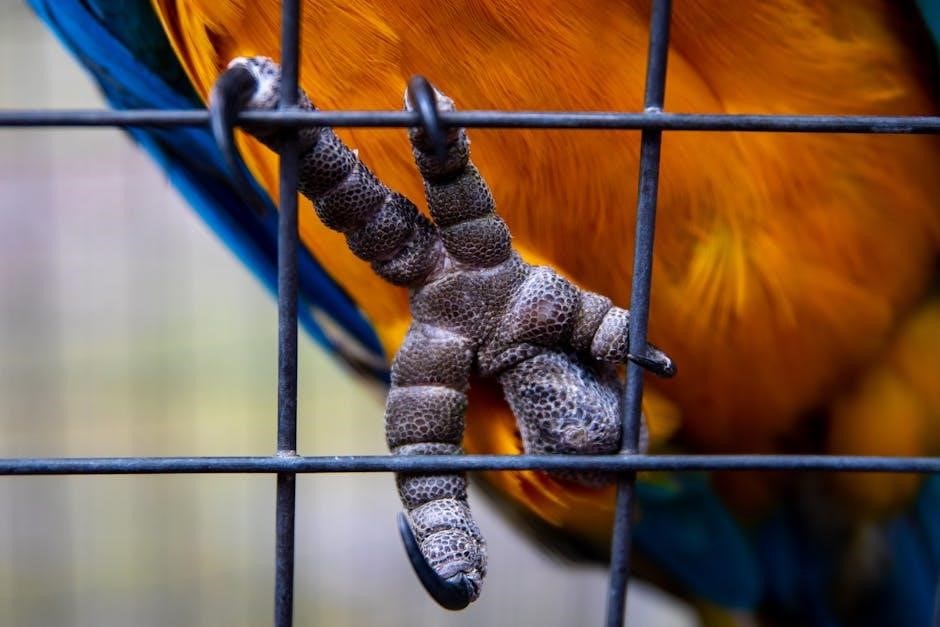
Finding an “I Know Why the Caged Bird Sings poem PDF” allows for close reading of how the poem illustrates the psychological toll of captivity. The caged bird’s desperate song isn’t merely an expression of sadness, but a powerful act of resistance against its oppressors.
Ultimately, the poem argues that freedom is not simply the absence of physical constraints, but also the ability to express oneself authentically and to live with dignity, a right denied to the caged bird.
Themes of Identity and Self-Expression
“I Know Why the Caged Bird Sings” profoundly explores the struggle to maintain identity and find a voice in the face of oppression. The poem suggests that self-expression is fundamental to the human spirit, and its suppression can be deeply damaging.
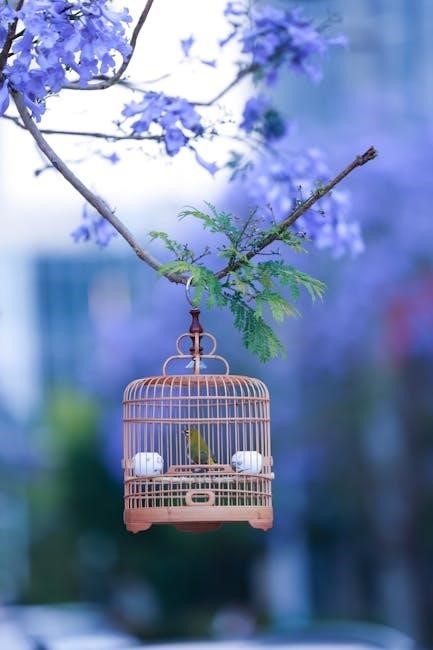
The caged bird’s song, despite its limitations, becomes a powerful assertion of its being. It refuses to be silenced, choosing instead to express its pain, longing, and resilience through music. This act of singing is a declaration of identity, a refusal to be defined solely by its captivity.
Finding an “I Know Why the Caged Bird Sings poem PDF” facilitates a deeper understanding of how Angelou connects personal experience with broader societal issues. The poem reflects her own journey of finding her voice amidst racial prejudice and discrimination.
Ultimately, the poem champions the importance of embracing one’s true self and using one’s voice to challenge injustice, even when faced with seemingly insurmountable obstacles.
The Poem as a Reflection of Angelou’s Autobiography
“I Know Why the Caged Bird Sings” resonates deeply as a poetic distillation of Maya Angelou’s own life experiences, particularly those detailed in her groundbreaking autobiography of the same name. The poem isn’t merely an abstract exploration of freedom and oppression; it’s a deeply personal reflection on her childhood trauma and her journey toward self-acceptance.
The imagery of the caged bird directly mirrors Angelou’s own feelings of confinement and powerlessness during her youth, stemming from racial discrimination and personal hardship. Her silence following a traumatic event finds echo in the bird’s initial muted cries.
Finding an “I Know Why the Caged Bird Sings poem PDF” allows readers to trace the autobiographical threads woven throughout the verses. The poem serves as a condensed, emotionally charged version of the larger narrative presented in her memoir.
Angelou’s ability to transform personal pain into universal art is powerfully demonstrated in this work, solidifying its place as a cornerstone of both literature and autobiographical writing.
Literary Devices: Symbolism and Metaphor
Maya Angelou masterfully employs symbolism and metaphor throughout “I Know Why the Caged Bird Sings,” elevating the poem beyond a simple narrative to a powerful commentary on freedom and oppression. The central metaphor, the caged bird itself, represents the marginalized, specifically African Americans facing systemic racism and societal constraints.
The “free bird” functions as a contrasting symbol, embodying privilege and the uninhibited access to opportunities denied to others. This duality highlights the stark inequalities prevalent in American society.
Finding an “I Know Why the Caged Bird Sings poem PDF” facilitates a closer examination of these devices. The bird’s song, despite its captivity, symbolizes resilience, hope, and the enduring human spirit’s refusal to be silenced.
Angelou’s use of imagery further reinforces these symbolic meanings, creating a vivid and emotionally resonant experience for the reader. The poem’s enduring power lies in its ability to convey complex ideas through accessible and evocative language.
Literary Devices: Imagery and Alliteration
Angelou’s “I Know Why the Caged Bird Sings” is rich with vivid imagery, painting a stark contrast between the experiences of the free bird and its caged counterpart. Descriptions of the free bird “floats down stream” and enjoying the “wind currents” evoke a sense of boundless liberty, while the caged bird’s clipped wings and restricted space create a feeling of confinement.
The poem also utilizes alliteration to enhance its musicality and emphasize key ideas. Repeated consonant sounds, like in “fearful trill,” draw attention to the bird’s desperate song and the emotional weight of its captivity.
Finding an “I Know Why the Caged Bird Sings poem PDF” allows for detailed analysis of these techniques. The imagery isn’t merely descriptive; it’s symbolic, representing the broader struggle for freedom and equality.
Angelou’s skillful use of language creates a powerful emotional impact, resonating with readers long after they’ve finished the poem. The combination of imagery and alliteration elevates the work to a level of artistic brilliance.
Finding a “I Know Why the Caged Bird Sings” Poem PDF
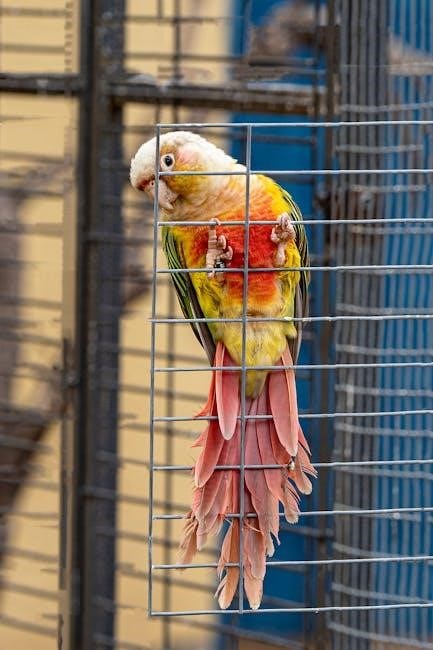
Locating a “I Know Why the Caged Bird Sings” poem PDF is surprisingly straightforward, with numerous online resources offering free access. Many educational websites dedicated to poetry and literature host downloadable PDFs for student and scholarly use. A quick search on Google or other search engines using the precise title will yield a plethora of results.
Reputable sources include poetry foundation websites, online libraries, and academic databases. Websites like Scribd and Course Hero often contain uploaded versions, though verifying the source’s legitimacy is crucial;
Analyzing the poem PDF allows for focused study of its structure, imagery, and themes. Digital formats facilitate annotation and close reading, enhancing comprehension.
Be mindful of copyright restrictions and prioritize accessing PDFs from trusted sources to ensure authenticity and avoid potential malware. Several institutions offer legally accessible versions for educational purposes, promoting responsible engagement with Angelou’s work.
Critical Reception and Lasting Impact
“I Know Why the Caged Bird Sings” garnered immediate and widespread acclaim upon its publication, resonating deeply with readers and critics alike. The poem’s powerful imagery and poignant exploration of racial oppression sparked crucial conversations about the African American experience.
Its accessibility, even in PDF format, has ensured its continued relevance across generations. The poem’s enduring impact lies in its ability to articulate the universal longing for freedom and self-expression, transcending cultural boundaries.
Accessing the poem PDF facilitates continued scholarly analysis, with countless essays and articles dedicated to unpacking its complex layers of meaning. Educators frequently utilize the PDF in classrooms to foster critical thinking and empathy.
The poem’s influence extends beyond literary circles, inspiring activists and artists to challenge injustice and advocate for equality. Its verses remain a potent symbol of resilience and hope, solidifying Maya Angelou’s legacy as a literary icon.